IKEA Place Case Study: How IKEA’s AR Furniture App Increased Conversions by 11% Ikea-place-case-study

98% accuracy. 8 million downloads. The IKEA Place augmented reality app launched in 2017 and quietly became the blueprint every furniture and home décor brand has been copying ever since. Here's the full story.
By Vinay Agastya, April 30, 2026, 8 min read.
What is IKEA Place?
IKEA Place is a free augmented reality app launched by IKEA in September 2017. It uses your smartphone camera to place true-to-scale 3D furniture in your actual room with 98% dimensional accuracy, letting you see exactly how any IKEA product looks and fits in your space before you buy it.
Does the IKEA Place AR app increase furniture conversions?
Yes. IKEA reports that customers who use the IKEA Place AR furniture app are 11% more likely to complete a purchase. By letting shoppers visualize products in their actual rooms at accurate scale, the app removes the core anxiety that stops furniture shoppers from buying online with confidence.
How accurate is the IKEA Place augmented reality furniture app?
IKEA Place achieves 98% dimensional accuracy. The app automatically scales furniture based on your room dimensions and renders fabric texture, shadow response, and lighting precise enough to reveal whether a sofa's grey tone actually matches your existing rug before you spend $800 on it.
The short version
- The IKEA Place AR furniture app launched September 2017: one of the first mainstream augmented reality apps built for commerce, not entertainment.
- It achieved 98% dimensional accuracy, 8+ million downloads, and ranked as the #2 free ARKit app on Apple's App Store.
- Customers who used the IKEA Place app were 11% more likely to complete a purchase — directly reducing the expensive return mistake that plagues online furniture shopping.
- No blockchain. No metaverse. No headset. Just a phone camera and 98% accuracy. That simplicity is the entire lesson.
In this article
- The expensive furniture mistake that costs online shoppers millions every year
- How the IKEA Place AR app works: 98% accuracy, zero tape measure
- IKEA Place case study results: 8M downloads, 11% higher conversion
- Why the IKEA Place furniture app succeeded where metaverse experiments failed
- How IKEA Place became the AR furniture shopping blueprint every brand copied
- The real cost of getting furniture wrong and what IKEA Place changed
- Frequently asked questions
98%
Dimensional accuracy of the IKEA Place AR app
8M+
Total app downloads since September 2017
11%
Higher conversion rate for IKEA Place app users
The Expensive Furniture Mistake That Costs Online Shoppers Millions Every Year
Buying furniture online is a gamble with your own living room as the stake.
You find a sofa you like. The photos look great always shot in a perfectly lit Scandinavian apartment with no competing context. You check the dimensions: 220cm wide. You pull out a tape measure, squint at the wall, and try to visualize it. You can't. Not really. So you buy it anyway, $400, $800, $1,200 and wait three weeks for a box the size of a small coffin to arrive at your door.
You assemble it in two hours. You step back. It's the wrong shade of grey. Or six inches too wide. Or it looked minimal online and looks like a waiting room couch in your actual space.
Now what? Return shipping on a sofa isn't just inconvenient, it's expensive, logistically complex, and often not refunded. Most people don't bother returning furniture they don't love. They live with it. And quietly resent that $800 for the next five years.
The scale of the problem:
Furniture returns are part of a broader crisis in online retail. Industry data from the National Retail Federation shows roughly 15–17% of all retail purchases are returned annually totalling $850–890 billion in merchandise, much of it from online shopping. Wrong size and wrong appearance are among the most common return reasons for home goods. This is not a niche inconvenience. It is a systemic failure in how furniture is sold online.
This is what made AR furniture shopping commercially significant, not because it was technically impressive, but because it was economically necessary. The purchase mistake was real, recurring, and expensive. The question was whether technology could eliminate it.
IKEA Place wasn't built to showcase AR. It was built to stop an expensive, recurring customer mistake. That framing is why it worked when everything else didn't.
How the IKEA Place AR Furniture App Works: 98% Accuracy and Zero Tape Measure Required
In September 2017, Apple released ARKit with iOS 11, putting precise AR capabilities into hundreds of millions of existing iPhones. IKEA's digital transformation team, led by Michael Valdsgaard, moved quickly. Within months of ARKit's release, the IKEA Place app launched as one of the first AR applications built specifically to close a commercial gap, not to demonstrate technology for its own sake.
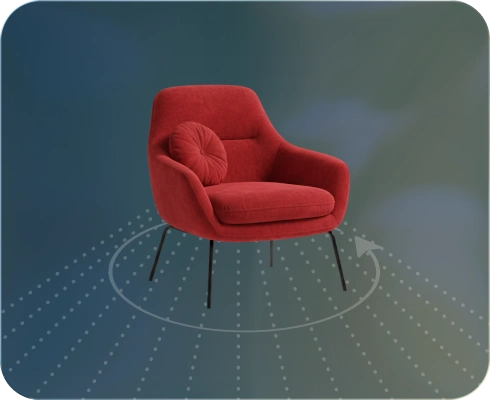
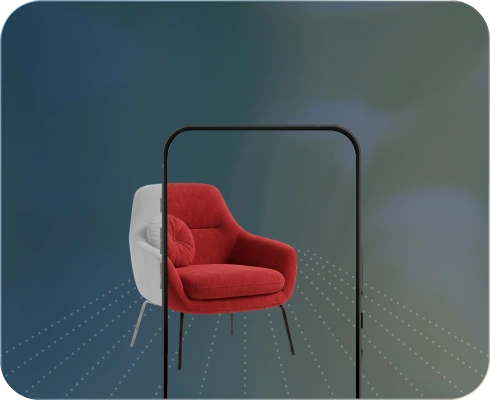
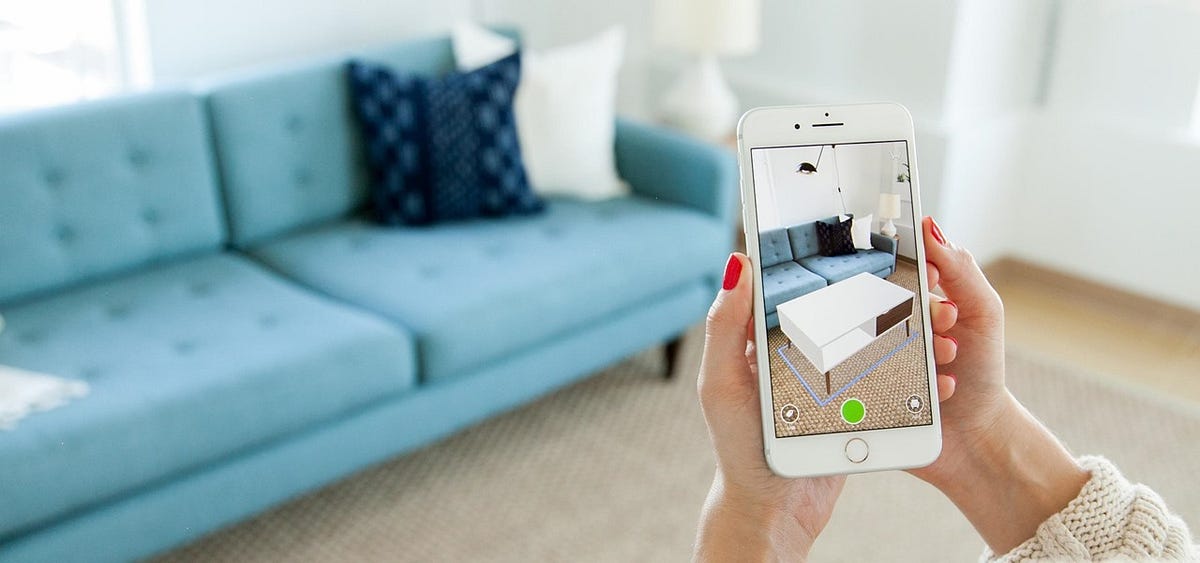
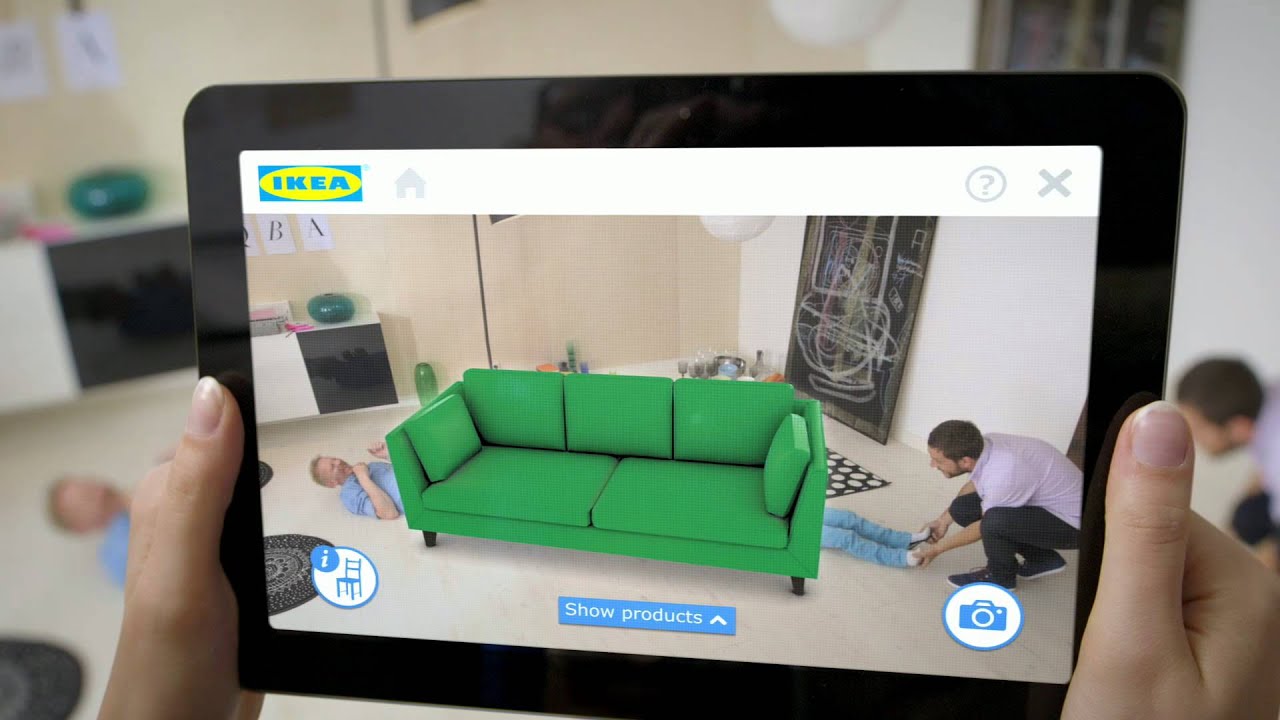
The experience was deliberately frictionless. Open the IKEA augmented reality app. Point your camera at a room. Select a product from the catalogue. Watch a true-to-scale 3D model of that product appear in your actual room, in your actual lighting, with accurate shadow response and material rendering.
How the IKEA Place AR app works step by step
- Room scan
- The app uses your smartphone camera to detect the floor surface and map room dimensions using Apple ARKit (iOS) or Google ARCore (Android)
- Product selection
- Browse over 2,000–3,200 IKEA products in the in-app catalogue by category, style, or search
- AR placement:
- Tap to place a product: it appears at true-to-scale size (98% accuracy) anchored to your real floor
- 360° inspection
- Walk around the placed item, view it from any angle; the model stays exactly where you put it as you move
- Lighting and material rendering:
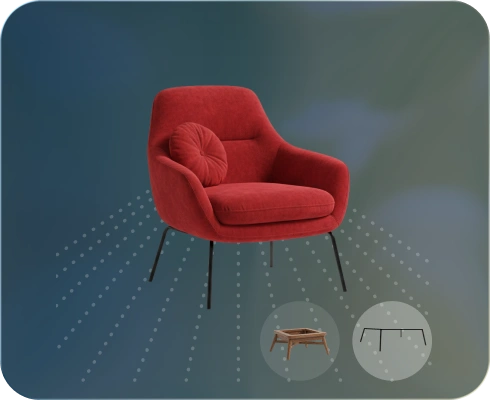
- Fabric texture, shadow response, and light interaction adjust to your actual room environment in real time
- Save, share, and purchase.
- Capture your arrangement, share it for a second opinion, or tap directly through to IKEA's e-commerce site to purchase
The 98% dimensional accuracy wasn't a marketing claim. It came from IKEA's official product launch materials. The rendering engine was calibrated to show fabric texture and material response under different lighting conditions, not just basic geometry. This is what separated the IKEA Place furniture app from novelty AR demos: it was precise enough to actually answer the question that had always stopped furniture shoppers from buying online with confidence.
"When we first launched IKEA Place, we gave our customers the opportunity to 'try before you buy' for the first time since IKEA was established."
— Michael Valdsgaard, Leader of Digital Transformation, Inter IKEA Systems
The app launched on iOS in September 2017 and expanded to Android (via ARCore) in March 2018, bringing AR furniture visualization to over 100 million additional Android devices. By that point, the product catalogue had grown from 2,000 to 3,200+ items, and the app had already demonstrated traction that would reshape how every major furniture retailer thought about its digital experience.
IKEA Place Case Study Results: 8 Million Downloads and 11% Higher Conversion Rate
Every metric below is sourced from IKEA's own statements, official app store ranking data, or cited industry research — not from secondary aggregators repeating unverified claims.
| IKEA Place Metric | Result | Source |
| Total app downloads | 8+ million | IKEA, reported at Android launch (Mar 2018) |
| App Store ranking | #2 free ARKit app | Sensor Tower / Marketing Dive (Apr 2018) |
| Dimensional accuracy | 98% | IKEA official product launch release (Sep 2017) |
| Products available at launch | 2,000+ (iOS) | IKEA Global Newsroom |
| Products after Android expansion | 3,200+ | Inter IKEA Systems press release (Mar 2018) |
| Conversion rate lift | 11% more likely to purchase | IKEA company data |
| Consumer willingness to pay more (AR) | 40% | Threekit consumer research |
| Languages supported | 26+ | IKEA app documentation |
| Launch date (iOS) | September 2017 | IKEA Global Newsroom |
| Launch date (Android) | March 2018 | Inter IKEA Systems |
The 11% conversion rate increase from IKEA Place is the number that carries the most commercial weight not because it's the largest on this table, but because it's the most directly connected to revenue. Applied across IKEA's global e-commerce volume, an 11% lift in purchase completion represents hundreds of millions in incremental sales from a free app requiring no hardware investment from the customer and no ongoing paid media spend to sustain.
The 40% willingness-to-pay-more figure adds a second dimension: the IKEA AR furniture app didn't just increase purchase likelihood. It increased the value of the purchases made. When customers could see in their actual room that the premium fabric looked meaningfully better against their specific wall colour, they chose the upgrade. Not because they were persuaded. Because they could see it.
IKEA Place didn't make the products better. It made the customer's decision easier. That one shift moved the needle on both conversion rate and average order value simultaneously.
Why the IKEA Place Furniture App Succeeded Where Metaverse and NFT Experiments Failed
Between 2017 and 2024, hundreds of brands launched immersive digital experiences: virtual worlds on Roblox, NFT collections on Ethereum, metaverse showrooms on platforms that no longer exist. Most of those experiments are gone. The IKEA Place AR app is still here.The difference isn't technology. It's problem selection.
Why IKEA Place AR succeeded where other immersive experiments failed: 3 structural reasons
- It solved a specific, expensive problem people actually had."Will this furniture fit and look right in my room?" is a question that has always stopped furniture shoppers from buying with confidence online. IKEA Place answered it with 98% accuracy. Nike's Nikeland generated brand engagement. Adidas's NFT drop created community access. IKEA Place prevented an expensive mistake. That's the category that endures.
- It required nothing new from the customer.No VR headset, no Roblox account, no crypto wallet. Just an iPhone with iOS 11. IKEA met hundreds of millions of existing smartphone users where they already were, using hardware they already owned. Adoption was a software update, not a lifestyle change.
- It connected directly to the purchase.The IKEA Place app linked to IKEA's e-commerce platform. The distance between "I can see this in my room" and "I own this" was measured in taps. Most immersive experiences floated as standalone novelties with no direct purchase path. IKEA built a funnel.
How the IKEA AR App Made Physical Store Visits Better, Not Obsolete
Here's the counterintuitive outcome most analyses overlook: the IKEA Place augmented reality app didn't replace the physical store. It improved it. Customers who used the app arrived at IKEA with pre-validated shortlists. They'd already confirmed the KALLAX shelving unit fit their hallway and the STRANDMON armchair matched their existing flooring. Store visits shifted from unfocused browsing to confident purchasing.
The expensive mistake that triggered the app buying the wrong sofa, returning it, resenting the experience happened less often. And the store visit that followed was faster, more purposeful, and more likely to result in a transaction. The IKEA Place furniture app didn't compete with the store. It qualified the customer before they arrived.
The insight the industry keeps applying backwards:
Brands look at IKEA Place and conclude: "We need an AR app." That's the wrong lesson. The right lesson is: identify the specific, expensive mistake your customers are making, and build the most frictionless possible tool to prevent it. IKEA Place succeeded because the mistake was real, recurring, and costly and the tool required zero behavior change to use. Most AR commerce experiments fail because they start with the technology and work backwards to find a problem it might solve. IKEA started with the problem.
How IKEA Place Became the AR Furniture Shopping Blueprint Every Brand Copied
The IKEA Place app launched in September 2017 as a retailer-specific tool for one furniture company. Within five years, it had become the foundational template for AR furniture shopping across the entire category and beyond it.
Wayfair, Houzz, West Elm, Target, and Crate & Barrel all launched AR furniture visualization experiences following IKEA's framework. The core mechanics: true-to-scale 3D placement via smartphone camera, room scanning, material and lighting rendering, direct purchase path are identical in every implementation. The template IKEA established in 2017 is the template everyone follows in 2026.
The pattern spread to other product categories where the same core problem exists. The gap between how something looks on a screen and how it actually appears in your real context. Beauty brands built AR makeup try-on apps (Sephora, L'Oréal). Eyewear brands let you try frames on your actual face (Warby Parker). Sneaker brands placed shoes on your feet. The core mechanic is identical to IKEA Place: reduce purchase uncertainty by letting people see the product in their own context before committing.
The accuracy standard IKEA Place set and why it matters for every brand building AR:
After IKEA Place established 98% accuracy as the baseline, anything less stopped being a viable option. If a customer tries an AR furniture app and the product appears the wrong size, or the texture renders flat and synthetic, they don't conclude that this specific brand's app is poor. They conclude that AR doesn't work and they don't try it again, from anyone. IKEA set the minimum viable standard for the entire category. Every brand building AR commerce today is competing against that benchmark.
The Real Cost of Getting Furniture Wrong and What the IKEA Place App Changed
Step back from the technology and look at what actually changed.Before the IKEA Place AR app, buying furniture online meant committing hundreds or thousands of dollars to a product you couldn't fully visualize in your own space. The wrong shade, the wrong scale, the wrong aesthetic, these mistakes were common, expensive, and largely unavoidable. Return rates for online furniture were structurally high because the product of the purchase process was always a guess.
After IKEA Place, that guess became a preview. Not a perfect preview. The app couldn't tell you how the cushion firmness felt, or whether the wood grain matched your floors under artificial light at night. But it answered the two questions that caused the most expensive mistakes: will it fit? and will it look right? With 98% accuracy, on a phone every customer already owned, for free.
The most commercially durable immersive commerce experience of the last decade wasn't a virtual world.It was a free app that stopped an expensive mistake.The broader lesson for every brand selling products online: the purchase anxiety that causes cart abandonment, hesitation, and returns is not a marketing problem. It's a visualisation problem. Customers aren't afraid to spend money. They're afraid to spend money wrong.
The brands solving that specific fear with whatever technology is most accessible and most accurate for their product category are the ones building durable e-commerce businesses. IKEA identified the fear in 2017. They built the tool. And the furniture industry followed.The same purchase anxiety that costs furniture shoppers hundreds of dollars per wrong decision exists in jewellery, fashion, automotive, and home products. It exists anywhere a customer makes a significant buying decision based on images that can't fully communicate what the product actually looks and feels like in their specific reality.
The tools that eliminate that anxiety don't have to be apps. They don't require Apple's ARKit or a physical store. Browser-based 3D configurators, virtual try-ons, and spatial product placement tools built into a brand's own website accomplish exactly what IKEA Place accomplished. They turn the most expensive question in online commerce into something the customer can answer for themselves, before they click buy.
That infrastructure is precisely what CTRUH builds. Not because immersive technology is interesting, but because the mistake it prevents is expensive and it happens millions of times a day.The same problem exists beyond furniture
What's stopping your customer from clicking buy and does a better experience remove it?
CTRUH builds browser-based virtual try-ons, 3D configurators, and spatial showrooms for brands across jewellery, fashion, home products, and retail. No app download. No headset. The same outcome IKEA Place delivered, removing the visualisation gap that causes hesitation, abandonment, and costly returns — for any product category where customers need to see the product in context before they trust it enough to buy it.
Related case studies in AR and immersive commerce
Nike built Nikeland on Roblox. 26 million visited. Then 65% said it was boring. The full story. →
Ctruh Raises $2.5 Million Seed Round to Build the Infrastructure Layer of the Spatial Internet. →
Frequently Asked Questions About the IKEA Place AR Furniture App
What is the IKEA Place app and how does it work?
IKEA Place is a free augmented reality app that lets you virtually place IKEA furniture in your actual room using your smartphone camera. The app scans your room, scales furniture to 98% dimensional accuracy, and renders the product with accurate materials, texture, and lighting so you can see exactly how it looks in your space before buying. It launched in September 2017 on iOS and expanded to Android in March 2018.
Does the IKEA Place AR app increase conversion rates for furniture purchases?
Yes. IKEA reports that customers who use the IKEA Place AR app are 11% more likely to complete a furniture purchase. By letting shoppers see products at accurate scale in their actual rooms, the app reduces the purchase uncertainty that causes hesitation and cart abandonment in furniture e-commerce. A separate Threekit consumer study found 40% of consumers are willing to pay more for products they've been able to visualize through AR.
How accurate is the IKEA Place AR furniture visualisation?
IKEA Place achieves 98% dimensional accuracy, as stated in IKEA's official product launch materials. The AR system automatically scales products based on room dimensions scanned through the camera, and the 3D rendering engine also captures fabric texture, shadow behavior, and light response making it precise enough to show how a specific grey tone looks against your actual flooring and walls.
How many times was the IKEA Place augmented reality app downloaded?
IKEA Place was downloaded over 8 million times following its September 2017 launch. It ranked as the #2 free ARKit app on Apple's App Store according to Sensor Tower data, behind only Apple's native Measure app.
Which furniture brands launched AR shopping apps after IKEA Place?
Following IKEA Place's success, major furniture and home décor brands launched similar AR try-on experiences: Wayfair ("View in Room"), Houzz, West Elm, Target, Crate & Barrel, and Amazon. Each uses the same core mechanics IKEA established — true-to-scale 3D product placement via smartphone camera with a direct path to purchase. IKEA Place set the template in 2017 that every subsequent furniture AR app has followed.
Does the IKEA Place app reduce furniture return rates?
Yes. IKEA's digital transformation reporting noted higher customer satisfaction rates and reduced return rates following the introduction of the IKEA Place app. By letting customers verify product size, colour, and appearance in their actual rooms before purchasing, the app eliminates the visualization gap that causes the majority of furniture return decisions. Returns for wrong size or wrong appearance drop when customers can see the accurate product in their space before committing.
What does the IKEA Place case study teach about AR commerce?
The IKEA Place case study demonstrates that the most commercially durable AR experiences are not the most immersive or ambitious. They're the ones that solve a specific, expensive problem customers face at the moment of purchase. IKEA Place succeeded because it targeted a real, recurring mistake (buying furniture that doesn't fit or look right), used technology customers already owned (smartphones), and connected directly to purchase without requiring any new accounts or hardware.
Sources
- IKEA Global Newsroom — "IKEA Launches IKEA Place" (Sep 2017) — 98% accuracy, launch product count
- Inter IKEA Systems — "IKEA Place app now on Android" (Mar 2018) — Michael Valdsgaard quotes, Android expansion data
- Marketing Dive — "IKEA Place Ranks as No. 2 Free ARKit App" (Apr 2018)
- Retail Dive — "IKEA Nears Rollout of Augmented Reality App" (Sep 2017)
- Architect Magazine — "IKEA Launches Augmented Reality Application" (Sep 2017)
- SAGE Journals / Ozturkcan, S. — "Service Innovation: Using AR in the IKEA Place App" (2021)
- National Retail Federation — "Consumers Expected to Return Nearly $850 Billion in Merchandise in 2025" — retail return rate data
- Threekit — AR Consumer Willingness-to-Pay Study
- Renascence — "How IKEA Uses Technology to Improve Customer Experience in Retail"
- DataNext — "Case Study: Inside IKEA's Augmented Reality Furniture Strategy" (2025)
- Sensor Tower — App Store ranking data (ARKit apps, 2018)