Tiffany and Co Virtual Ring Try-On: How AR Engagement Ring Shopping Served Remote Couples
A $6,900 bracelet tried on via Snapchat, in your bedroom, using technology borrowed from high-end video games. How Tiffany and Co solved the hardest rendering problem in luxury AR, and what it reveals about why jewellery has always resisted going digital.
What is Tiffany and Co's AR try-on experience?
In February 2023, Tiffany and Co partnered with Snapchat to launch the Tiffany Lock Lens, the first AR experience built with ray tracing technology on mobile at scale. The Lens let users virtually try on the Tiffany Lock bracelet (starting at $6,900) using their smartphone camera and purchase it directly within Snapchat without leaving the app.
What is ray tracing and why does Tiffany use it for AR?
Ray tracing simulates how light physically moves through a scene, tracing its path as it reflects off metal, refracts through gemstones, and creates sparkle. For luxury jewellery AR, it is what makes the difference between a diamond that looks plastic and one that looks real. Tiffany used ray tracing because standard AR rendering was not accurate enough for jewellery at this price point.
When did Tiffany and Co first offer virtual jewellery try-on?
Tiffany launched its first virtual ring try-on in 2013 — a static website tool that overlaid ring designs on a digital hand model with adjustable skin tones. This was not live-camera AR. True camera-based AR try-on developed through the Engagement Ring Finder app and reached its most technically advanced form with the ray tracing Snapchat partnership in February 2023.
2013
Tiffany's first virtual ring try-on tool launched on website
$6,900
Starting price of Tiffany Lock bracelet shown in 2023 Snap AR
1st
Brand to deploy ray tracing AR on mobile at scale (Snapchat, Feb 2023)
The short version
- In February 2023, Tiffany and Co became the first brand to use ray tracing technology in a Snapchat AR Lens, letting users try on the Tiffany Lock bracelet (starting at $6,900) and purchase it without leaving the app.
- Tiffany used ray tracing because standard AR rendering makes jewellery look unconvincing. At luxury price points, unconvincing equals unsellable.
- Tiffany has been iterating on virtual try-on since 2013, when a static hand model tool launched on its website. The 2023 Snapchat partnership represented a decade of technological progression.
- Honest framing: Tiffany has not publicly released conversion figures from its AR initiatives. This article uses only verified, primary-sourced data from MIT Technology Review, TechCrunch, and Tiffany's own communications. Claims without verifiable sources have been excluded.
In this article
- Why luxury jewellery is the hardest category to sell in AR
- Tiffany's decade of virtual try-on: from static image to ray tracing
- What ray tracing AR actually is and why Tiffany needed it
- The Snapchat partnership: a $6,900 bracelet tried on in bed
- Why inaccurate luxury AR loses customers faster than no AR at all
- What Tiffany's AR investment reveals about high-value e-commerce
- Frequently asked questions
Why Luxury Jewellery Is the Hardest Category to Sell Through Augmented Reality
Furniture AR works with 98% dimensional accuracy and changes purchase behaviour measurably. Beauty AR works with realistic colour rendering and generates hundreds of millions of try-on sessions. Both are hard technical problems. Neither is as technically demanding as making a diamond look real on a screen.
Jewellery sits at the intersection of every challenge that makes product AR difficult. Precious metals reflect everything around them, including nearby surfaces, other fingers, ambient light sources, and the customer's skin tone. Gemstones refract light rather than reflecting it, splitting white light into spectral colour and creating the sparkle that is, for most buyers, the entire emotional point of a diamond. These optical behaviours are what the customer is actually evaluating when they try on a ring or bracelet in a store. In a well-lit boutique, those effects happen automatically and perfectly. They are the product.
Replicate them poorly in digital, and the result is not just aesthetically wrong. It is commercially destructive.
When a diamond looks flat or plastic in AR, the customer does not conclude that the technology is inadequate. They conclude that the jewellery cannot be trusted unseen. The AR experience has done the opposite of its job.
This is why Tiffany's approach to AR is worth examining not as a standard digital marketing case study but as a technical and commercial problem-solving story. The question was never "should we offer AR try-on?" The question was "what standard of AR is good enough to be worth offering at all?"
Tiffany's Decade of Virtual Try-On: From a Static Website Tool to Ray Tracing at Mobile Scale
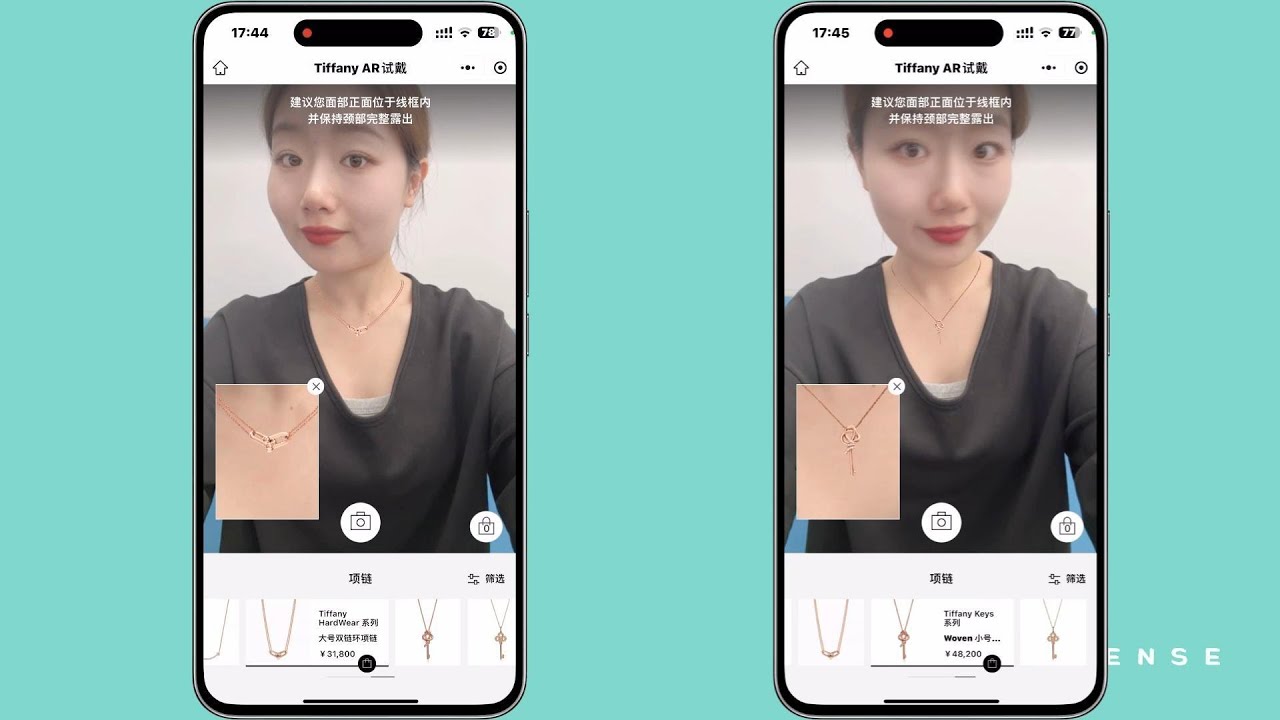
Most coverage of Tiffany's AR treats the 2023 Snapchat partnership as the beginning of the story. It is actually the latest chapter in a ten-year progression.2013Tiffany relaunches its website with a virtual ring try-on feature. Customers could select engagement ring styles and view them on a digital hand model with four adjustable skin tones. This was not live-camera AR: it was a static overlay tool. Customers were also directed to download Tiffany's app for a more immersive catalogue experience. Racked covered the launch as a meaningful step in luxury digital retail, noting the "full-on ring immersion" of the app alongside the improved website tool.
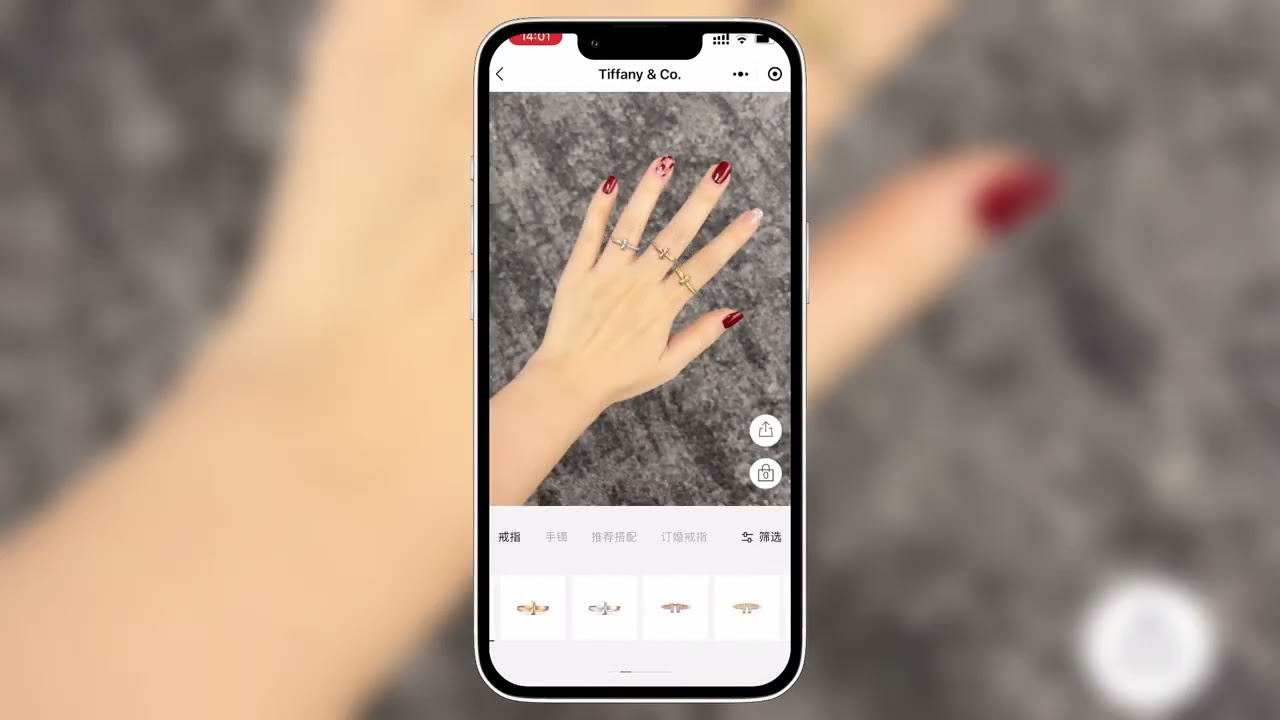
App eraTiffany's Engagement Ring Finder app evolved to offer photo-based virtual try-on. Users photographed their hand and selected ring styles to see how they looked as overlaid images. The app also introduced the "Circle of Friends" feature, allowing couples to save and share ring options within the app before making a decision. Tatler Asia covered the updated app as a practical tool for couples navigating ring selection together.
Feb 2023Tiffany partners with Snapchat to launch the Tiffany Lock Lens, the first AR Lens built with Snap's new ray tracing technology. The Lens allows live-camera AR try-on of the Tiffany Lock bracelet on the user's actual wrist, with purchase available directly within Snapchat. TechCrunch reports this as the first deployment of ray tracing on mobile at this scale. MIT Technology Review covers the partnership as a signal of luxury brands targeting Gen Z through AR.
2023Tiffany deploys Snap AR Enterprise Services at the U.S. Open, installing AR mirrors at a Tiffany interactive booth where visitors interact with digital tennis rackets and the brand's iconic trophies. Separately, Tiffany uses AR to offer virtual try-on of the famous Tiffany Yellow Diamond (128.54 carats) at an archival exhibition at London's Saatchi Gallery.
The decade-long pattern:Each iteration of Tiffany's digital try-on has moved from static and approximated (2013 skin tone selector on a hand model) to dynamic and accurate (2023 ray tracing that responds to actual ambient lighting). This is not a company deploying AR opportunistically. It is a company that has been solving the same core problem for ten years, iterating toward the accuracy standard that luxury requires.
What Ray Tracing AR Actually Is and Why Tiffany Specifically Needed It
Ray tracing is a rendering technique from high-end video games and film production. It works by simulating the physical path of light beams as they interact with surfaces in a scene. A standard rendering algorithm calculates how light hits an object from a single direction. Ray tracing calculates how light bounces, reflects, and refracts across multiple surfaces, tracking each photon's path through the environment.
For a sofa or a chair, standard AR rendering is sufficient. The surface receives light, reflects it in a broadly predictable way, and the visual result looks convincing enough for a furniture purchase decision. For jewellery, standard rendering breaks down at exactly the moments that matter most.
Why standard AR rendering fails for luxury jewellery specifically
- Diamond refraction: A diamond doesn't reflect light from its surface like a painted wall does. Light enters the stone, bounces internally across multiple facets following the diamond's cut geometry, and exits as separated spectral colours. This is what creates sparkle. Standard rendering cannot simulate this behaviour accurately in real time without ray tracing.
- Metal environment reflection: A gold or platinum setting reflects the environment around it, including the customer's fingers, nearby surfaces, and multiple ambient light sources simultaneously. An accurate rendering of a gold band on your hand shows your own skin and fingers reflected in the metal. Standard AR renders a generic approximation. Ray tracing captures the actual environment.
- Lighting variance: A ring or bracelet viewed in bedroom lighting should look different from the same piece viewed in office lighting or sunlight. Ray tracing recalculates light interaction based on the actual ambient environment the camera is capturing. Standard AR uses fixed lighting models that don't respond to real room conditions.
The consequence of getting this wrong is not minor. Luxury jewellery operates in a category where the buyer's emotional response to the product's beauty is the primary purchase driver. A gemstone that renders as a coloured blob rather than a sparkling faceted structure communicates, at a gut level, that this is not a real diamond. The purchase confidence the AR was supposed to build disappears instantly.
"People want the product in AR to look like the real product in the store. With jewelry, that means making the glint of gems as realistic as possible."
Ziyou Jiang, doctoral researcher at the University of Georgia, in MIT Technology Review (March 2023)
Jiang surveyed 134 Gen Z consumers about how AR influences luxury purchase decisions. Her finding: when a luxury product could use AR to create genuine interactivity and a realistic virtual experience, it created a meaningful intention to purchase. When the AR experience looked low-fidelity, it did not.
The Tiffany Lock Lens on Snapchat: A $6,900 Bracelet Tried On via Smartphone
In February 2023, Snap announced the launch of ray tracing for its Lens Studio platform. Tiffany was the exclusive launch partner, and the Tiffany Lock Lens was the first AR experience ever built with the technology at mobile scale.
The mechanics were straightforward: a Snapchat user opened the Lens using their smartphone's rear camera. The system detected their wrist and mapped its surface geometry. A photorealistic 3D model of the Tiffany Lock bracelet was then rendered onto the wrist using ray tracing, with light reflection and material properties calculated from the actual ambient environment the camera was capturing.
"This Lens allows you to try on Tiffany Lock bracelets using AR, and when you're ready, purchase without leaving the app."
Snap, via TechCrunch, February 2023
The purchase integration matters as much as the rendering. A customer who tries on a $6,900 bracelet in their bedroom and decides they want it can complete the transaction inside Snapchat, without a redirect to a browser, a login to a separate site, or a context switch that interrupts the decision. The moment of peak emotional engagement and the moment of transaction are the same moment.
The platform choice reflects where Tiffany needs to build relationships with the next generation of luxury customers. As MIT Technology Review reported on the partnership: "Brands are tapping into Snapchat's largely Gen Z community to make the world a bit more interactive and a bit more fun," in the words of Snap's head of luxury Geoffrey Perez. Tiffany Lock bracelets are not impulse purchases at their price point. But a Gen Z customer who tries one on virtually, shares the image, and saves the product to revisit when purchasing capacity arrives has been introduced to the brand in a way no display advertisement can replicate.
Why Inaccurate Luxury AR Loses Customers Faster Than No AR at All
This is where the Tiffany story becomes commercially instructive beyond jewellery. In lower-consideration categories, consumers tolerate imprecision in AR. An IKEA sofa that renders 2% off its actual dimensions still confirms the general scale and colour. An eyewear frame that looks slightly artificial still communicates how glasses will sit on the face. The stakes of the decision and the price of being wrong are low enough that approximate visualization still builds net confidence.
At luxury price points, this tolerance collapses entirely. The customer considering a $6,900 bracelet has a much higher accuracy threshold. They need the gold to look like gold, not like a metallic texture applied to a cartoon. They need the light to respond to the room they are actually in. And they need the bracelet to sit on their wrist with the weight and presence of a real object.
The inverse relationship at luxury price points:Below a certain fidelity threshold, AR try-on is not a neutral feature for luxury jewellery. It actively damages purchase intent. A customer who sees a flat, unconvincing rendering of a diamond ring doesn't think "this AR is limited." They think "this ring is not as beautiful in reality as it looked in the photographs." They do not return to the store. They reconsider the purchase entirely. Getting AR wrong for a luxury jewellery brand is worse than having no AR. This is why Tiffany's investment in ray tracing was not a technology choice. It was a brand protection decision.
The standard Tiffany set through the Snapchat partnership, making ray tracing accessible at mobile scale for the first time, raises the bar for every luxury brand that follows. A Tiffany competitor that launches jewellery AR with standard rendering in 2026 is not just offering a less impressive feature. They are offering an experience that, by comparison, looks cheap. In luxury, looking cheap is not a minor setback.
The Engagement Ring Context: Why Accuracy Failure Is Especially Costly
The most emotionally significant application of jewellery AR is also the one with the highest accuracy demand. Engagement ring purchases are decisions that couples make with significant deliberation, often over weeks or months. A ring tried on virtually that looks less beautiful than expected, due to flat rendering or poor light response, can introduce doubt that derails a purchase that was ready to happen. The cost of that doubt is not measured in click-through rates. It is measured in a sale that never closes.
This is why the evolution from Tiffany's 2013 static hand model to the 2023 ray tracing Lens is not simply a technology upgrade story. It is the story of a brand spending ten years solving the specific accuracy problem that makes jewellery digital commerce viable or not viable, depending entirely on whether the rendering is good enough.
What Tiffany's AR Investment Reveals About High-Value E-Commerce
Tiffany has not published conversion data from its AR initiatives, and this article does not claim commercial results that cannot be verified. But the strategic logic of the investment is clear without needing those numbers.
A jewellery brand selling online faces a structural gap between the product experience in a boutique and the product experience on a screen. In a boutique, light plays across metal and stone in ways that are responsible for a significant share of the emotional response that drives the purchase. On a flat screen, that light experience is approximated by photography. Photography is always an imperfect substitute. It cannot capture how a diamond sparkles when you move your hand, or how gold responds to the specific lighting of your office or kitchen.
AR, at sufficient fidelity, closes part of that gap. Not because it perfectly replicates the boutique experience, but because it brings the light response into the customer's actual environment. The diamond now sparkles in their bedroom light, under their ambient conditions, on their actual wrist or finger. That is a meaningfully different experience from a photograph.
Tiffany's decade of iteration toward ray tracing accuracy represents a bet that closing that gap, even partially, at the point of consideration is worth the technical investment. Given that Snap reported 250 million users engaging with its AR Shopping Lenses more than five billion times in 2022 (TechCrunch, February 2023), the platform's reach for this kind of activation is substantial. What proportion of those interactions translated to consideration for Tiffany specifically is not publicly known. What is known is that the technology to deliver it at accuracy standards previously unavailable on mobile now exists, deployed first by Tiffany.The brands that move next in luxury AR are not competing against Tiffany's 2013 static tool. They are competing against ray tracing on a wrist in a bedroom. That bar has been set.
The principle transfers
Every product category has an accuracy threshold below which AR reduces confidence instead of building it. The question is where that threshold sits for yours.
Tiffany spent a decade solving the accuracy problem for luxury jewellery because getting it wrong was commercially worse than not offering it at all. CTRUH builds browser-based AR and 3D commerce tools across jewellery, fashion, and home categories, with rendering standards calibrated to the purchase stakes of each product. Whether or not that fits your current roadmap, the question Tiffany forced into focus is worth sitting with: at what fidelity level does your customer's purchase confidence actually increase?
Related case studies
Gucci Garden Roblox Case Study: 20M Visitors, a $4,115 Virtual Bag, and What Luxury Brands Learned
Audi City VR Showroom: The Virtual Reality Car Experience That Made the Test Drive Optional
Frequently Asked Questions About Tiffany and Co AR Try-On and Luxury Jewellery AR
Does Tiffany and Co offer virtual try-on for rings and bracelets?
Yes. Tiffany and Co has offered various forms of virtual try-on since 2013. The most technically advanced implementation is the Tiffany Lock Lens on Snapchat, launched in February 2023, which uses ray tracing technology to render the Tiffany Lock bracelet on the user's wrist via live camera with realistic light response. Tiffany's app also offers photo-based ring try-on through the Engagement Ring Finder feature.
What makes Tiffany's 2023 AR different from earlier virtual try-on tools?
Tiffany's 2023 Snapchat Lens uses ray tracing, a rendering technique that simulates the physical path of light as it reflects off gold and refracts through gemstones. Earlier virtual try-on tools, including Tiffany's own 2013 website feature and photo-based app, used standard rendering that could not capture how precious metals and diamonds behave under real-world lighting. Ray tracing was the first technology capable of making luxury jewellery look convincingly real in mobile AR.
When did Tiffany and Co first launch virtual ring try-on?
Tiffany's first virtual try-on tool launched in 2013, when a website redesign introduced a feature letting customers view ring styles on a digital hand model with four adjustable skin tones. This was a static image tool, not live-camera AR. Tiffany's Engagement Ring Finder app followed, offering photo-based try-on. The first live-camera AR with advanced rendering quality came with the Snapchat ray tracing partnership in February 2023.
Did Tiffany's AR try-on increase sales or conversions?
Tiffany and Co has not publicly disclosed specific conversion or revenue figures from its AR initiatives. This case study is based on verified technology and platform information from MIT Technology Review, TechCrunch, and Snapchat's own communications. We have not included unverified conversion claims.
Why is luxury jewellery AR technically harder than furniture or fashion AR?
Luxury jewellery requires capturing how precious metals reflect surrounding surfaces and multiple light sources simultaneously, and how gemstones refract and scatter light to create sparkle. Standard AR rendering can handle approximate surface reflection but cannot replicate the optical complexity of diamonds and polished gold accurately enough for luxury purchase confidence. Below a certain fidelity threshold, jewellery AR makes pieces look flat and unconvincing, actively reducing purchase intent rather than increasing it.
Which other luxury jewellery brands use AR try-on?
Cartier developed proprietary AR technology through its Retail Innovation Lab and launched the Looking Glass in-store device in January 2023, along with online AR try-on for rings, bracelets, and watches on cartier.com. De Beers, Bulgari, and Swarovski have also launched jewellery AR try-on experiences. Tiffany's ray tracing Snapchat partnership set a new technical benchmark for mobile AR in the category.
Sources
- MIT Technology Review: "Cartier and Tiffany are getting into AR to sell luxury to Gen Z" (March 7, 2023) — Ziyou Jiang research, $6,900 bracelet price, luxury AR strategy context
- TechCrunch: "Snap introduces ray tracing technology for its AR lenses to enhance realism" (February 15, 2023) — first-to-mobile ray tracing confirmation, in-app purchase feature
- Social Media Today: "Snapchat Launches Ray Tracing for More Realistic AR Effects" (February 15, 2023) — Tiffany Lock Lens details
- iPhone in Canada: "Snapchat Debuts Ray Tracing Technology with Tiffany and Co Lens" (February 15, 2023) — global availability confirmation
- Racked: "New Tiffany Site Allows You to Virtually Try On Your Dream Ring" (October 21, 2013) — 2013 virtual try-on launch confirmation
- Tatler Asia: "Tiffany and Co updates Ring Finder app" — Engagement Ring Finder app with Circle of Friends feature
- OuispeakFashion: "Tiffany and Co Offers Immersive AR Experience at The U.S. Open" (2023) — 2023 AR expansion, Yellow Diamond Saatchi Gallery activation
- TechCrunch (February 2023): 250 million Snapchat users engaged with AR Shopping Lenses more than 5 billion times in 2022