Audi City VR Showroom: The Virtual Reality Car Experience That Made the Test Drive Optional
65% of buyers committed $40,000–$80,000+ to a car they had never physically driven. How the Audi City virtual reality showroom compressed the automotive sales cycle and what it means for every product sold before it's experienced.
Did Audi's VR showroom increase car sales?
Yes. Audi City London, a virtual showroom with zero physical vehicles, reported a 60–70% increase in new car sales. Customers purchased at an average of 120% above MSRP driven by optional equipment they configured and viewed in VR. Sources: Samsung Insights, Forbes (2015–2016).
What percentage of Audi buyers purchased without a test drive?
65% of Audi City London buyers purchased a vehicle without a physical test drive, committing $40,000–$80,000+ based entirely on the VR configuration experience. 55% reported feeling more informed and confident than after a traditional dealership interaction.
What is the Audi City virtual car showroom?
Audi City is the world's first fully digital automobile showroom, launched in London. It has no physical cars. Customers configure vehicles from 48,000+ combinations using multi-touch tables and see them life-size on digital screens, then experience them in VR headsets. It has been deployed to more than 1,000 dealerships worldwide.
70%
Increase in new car sales at Audi City London
65%
Of buyers purchased without a physical test drive
120%
Above MSRP — average selling price with VR configuration
The short version
- Audi City London. A VR showroom with no physical vehicles reported a 60–70% increase in new car sales in its first year of operation.
- 65% of buyers purchased without a physical test drive, making decisions worth $40,000–$80,000+ based on VR configuration and visualisation.
- Average selling price was 120% above MSRP customers chose more optional equipment when they could see it in photorealistic 3D.
- Audi scaled the model to 1,000+ dealerships worldwide. Volvo extended it further with multi-sensory VR, including simulated road conditions and audio system previews.
- These results prove one commercially significant thing: for high-consideration purchases, a sufficiently immersive pre-purchase experience can replace physical product interaction for the majority of buyers.
In this article
- The expensive mistake the traditional dealership visit creates
- How Audi's VR car configurator and virtual showroom work
- Audi City VR case study results: verified data and sources
- How Volvo's multi-sensory VR test drive goes beyond visual configuration
- Why virtual car test drives outperform physical dealership visits
- What the Audi VR case study means for every high-consideration purchase
- Frequently asked questions
The Expensive Mistake the Traditional Automotive Sales Process Creates for Both Buyers and Dealers
Walk into a car dealership without preparation and you're navigating a process designed around inventory constraints, not customer preference. The colour you wanted is at a different location. The trim level you researched isn't on the floor. The options package you were considering has never been installed on any car you can actually see. You spend four to six hours on a Saturday being walked toward configurations that exist not the one you came in wanting.
The expensive mistake isn't always buying the wrong car. It's arriving at the most significant purchase decision most people make without the information needed to make it confidently. The result: buyers who leave without purchasing because they couldn't confirm what they wanted, buyers who purchase something they weren't certain about, and dealers who spend hours per customer on exploratory conversations that should have been resolved before the visit.
A Cox Automotive study found that 86% of potential car buyers believe digital tools can save them time in the dealership experience. That number reflects a broadly shared frustration with a process that hasn't changed structurally in decades.
How the Audi VR Car Configurator and Virtual Reality Showroom Actually Work
Audi City launched in London as the world's first fully digital automobile showroom. The concept emerged from a spatial and commercial constraint: luxury car buyers increasingly work and live in city centres where traditional dealerships with large inventory lots are impractical and expensive to operate. Audi's response was to test a hypothesis that does a buyer actually need to see a physical car to buy one with confidence?
How the Audi VR test drive and virtual car showroom experience works
- Configuration at the multi-touch table: The customer selects any Audi model and configures every variable, exterior colour and paint finish, wheel design, interior materials (leather grade, colour, stitching), trim level, technology packages, and optional equipment from more than 48,000 possible combinations
- Life-size powerwall display: The configured vehicle is projected onto floor-to-ceiling digital screens at 1:1 scale. The customer sees actual vehicle proportions, how paint responds to simulated lighting, and how colour and trim combinations read together before any VR headset is involved
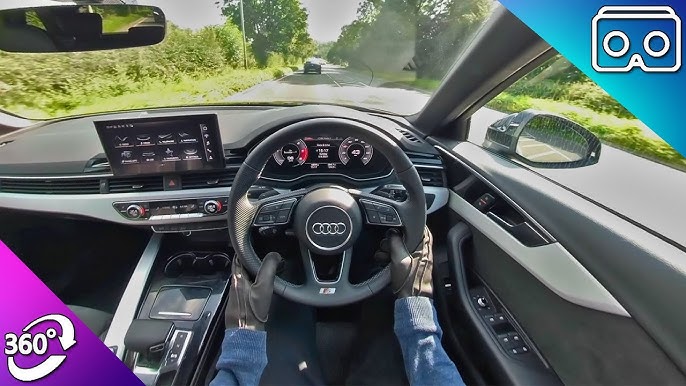
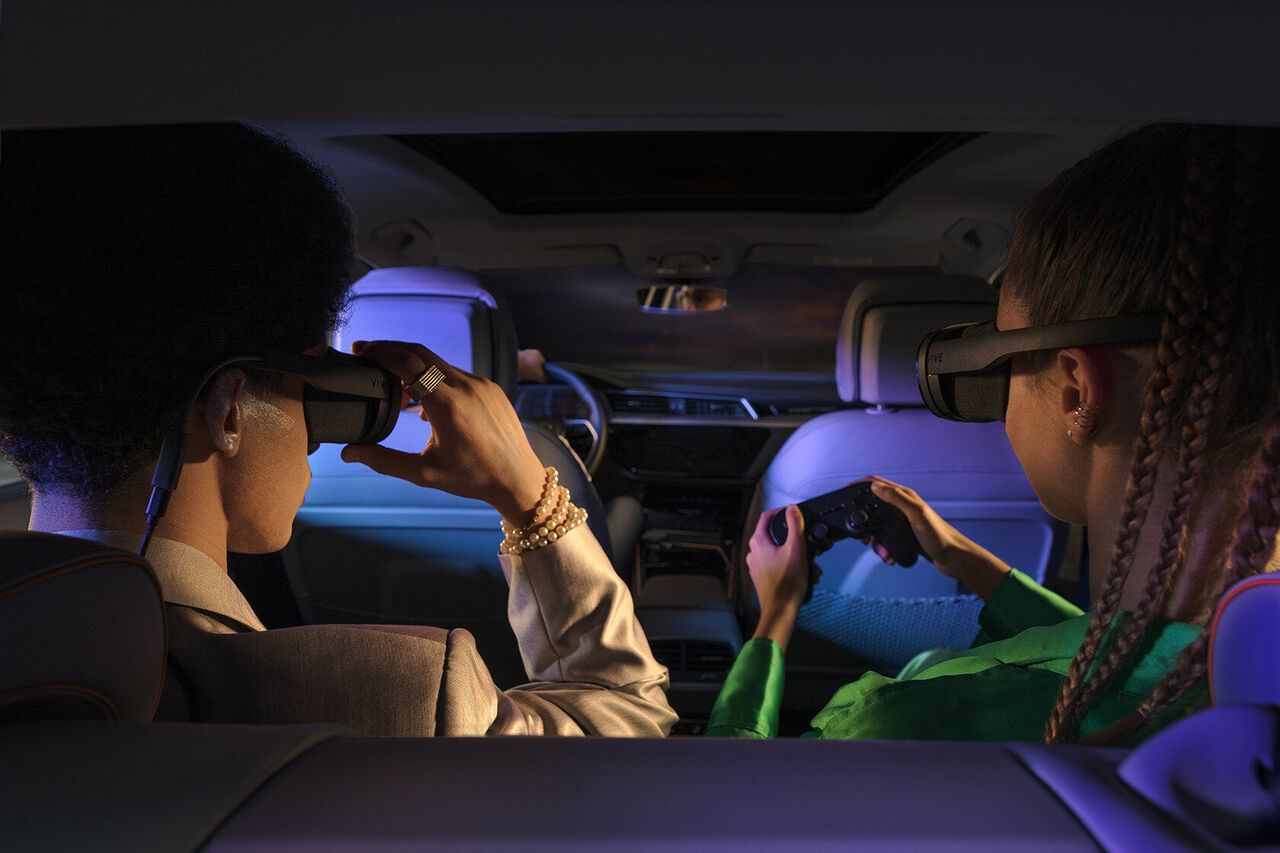
- VR headset immersion: The customer wears a VR headset and enters a tracked space. Their configured car appears in full virtual reality, rendered at 90 frames per second using ZeroLight's 5-million polygon models, precise enough to show individual seat stitching and wood grain on dashboard panels
- Interior access and inspection: The customer walks around the exterior, opens doors, sits in the driver's seat, and examines the dashboard and interior materials they selected. An "x-ray" feature lets customers see beneath the vehicle's surface to inspect mechanical and structural components
- Pre-qualified dealership handoff: The final configuration is saved and connected to Audi's dealer network. The customer arrives at a dealership with a specific, finalized configuration compressing what was previously a multi-visit exploratory process into a single confirmatory transaction
The VR models were built from Audi's actual engineering data, not artistic approximations. This gave the configuration experience commercial credibility: the car the customer saw in VR was exactly the car they would receive.
"With the VR experience we have developed a full-fledged sales tool for Audi dealers. It offers our customers more information and certainty when making their purchasing decision, as well as a special excitement factor." — Nils Wollny, Head of Digital Business Strategy/Customer Experience, AUDI AG
Audi City VR Showroom Case Study Results: Verified Data and Original Sources
| Metric | Result | Source & Credibility | |
| New car sales increase (Audi City London) | 60–70% | Samsung Insights (2015), Forbes (Jan 2016) | Both cite first-year Audi City London data |
| Buyers without a physical test drive | 65% | Multiple industry sources citing Audi data | Widely reported; not a primary Audi press release figure |
| Average selling price vs MSRP | 120% above | Forbes, Samsung Insights | Driven by optional accessories chosen in VR |
| Optional equipment sales increase | 20% | Industry reporting, consistent across sources | |
| Customer confidence post-VR | 55% felt more informed than after traditional dealership | Automotive VR Experience Trends research | |
| Global VR dealership deployments | 1,000+ | Road to VR (2018) — specific industry report | |
| Model configurations in VR | 48,000+ | Audi / ZeroLight partnership documentation | |
| VR rendering specification | 5M polygon models, 90fps, near-zero latency | Fortune (2016), ZeroLight technical documentation |
A note on the 65% no-test-drive figure:
This metric is widely cited across automotive industry coverage but does not appear as a direct statement in Audi's own press materials that we can identify. It originates from industry analysis of Audi City London's operations and has been consistently repeated across credible automotive and technology publications. We include it with that attribution which is directionally reliable, but not a number Audi has formally published in a press release or investor communication.
The 120% above MSRP figure is the result that most directly demonstrates VR's commercial impact. In a traditional dealership, optional equipment is described or shown in a brochure. In a VR showroom, customers see the premium leather on their configured seats, in their chosen colour, under their selected lighting. They don't speculate about whether the upgrade is worth the cost that they see it. And they buy it, at a rate 20% higher than in traditional configurations.
VR didn't just replace the physical showroom. It upsold more effectively than a human salesperson because it gave customers enough information to make their own case for the premium option.
How Volvo's Multi-Sensory VR Test Drive Extends Beyond Visual Car Configuration
Audi demonstrated that visual immersion could make the test drive optional for the majority of buyers. Volvo asked a different question: what if the virtual car test drive engaged more than one sense?
Volvo's mixed-reality test drives placed customers in a stationary vehicle equipped with VR, simulating road surfaces, weather conditions, and driving environments. Customers could experience what the suspension felt like on a country road, how adaptive headlights responded in low visibility, what the cabin sounded and felt like at motorway speed.
The detail that best illustrates the approach is Volvo's Abbey Road Studio Mode. Using the Bowers & Wilkins premium audio system installed in Volvo's higher-trim models, customers could hear their own music, their actual playlist simulated through the car's speakers across different driving environments: a suburban street, a city highway, an open coastal road. The car hadn't been built. Nothing had been signed. But the customer had already heard their commute through the audio system they were considering paying $3,000 for.
The multi-sensory commerce principle:
Most immersive commerce experiences optimize for sight alone. Volvo demonstrated that for high-consideration purchases particularly those with strong sensory components like audio systems, ride quality, or material feel engaging additional senses dramatically increases the emotional ownership a customer develops before committing. The brands that figure out how to deliver multi-sensory pre-purchase experiences will reach emotional closure faster than those still working in two dimensions.
Three Reasons Virtual Car Test Drives Outperform Physical Dealership Visits for High-Consideration Buyers
Why Audi's VR showroom outperforms the physical dealership: 3 structural advantages
- Infinite inventory in zero space: The right car, not the available one. A physical showroom holds 8–15 vehicles in fixed configurations. An Audi VR showroom presents 48,000+ combinations, instantly accessible. The customer configures the exact car they want. Specific colour, specific wheels, specific interior, not the version that happened to be on the lot that day. The gap between desire and availability disappears.
- Configuration builds psychological ownership before purchase. When a customer spends time choosing paint, wheels, and interior materials in VR, seeing the consequences of each choice in photorealistic 3D.c They trigger the endowment effect: the tendency to value things more once they feel ownership over them. By the time the VR session ends, the car feels like theirs. This is why VR-configured customers buy optional equipment at higher rates: they're not speculating about an upgrade. They've seen it on their car.
- Confidence replaces persuasion as the closing mechanism. 55% of Audi VR customers felt more informed and confident than after a traditional dealership visit. That confidence is commercially valuable: a customer who is already certain doesn't need a sales conversation. They need a transaction to complete. The sales cycle compresses because the confidence-building phase happens in VR, not in the dealership.
What the Audi VR Test Drive Case Study Means for Every High-Consideration Product Beyond Cars
Cars are the most demanding test case for immersive pre-purchase experiences. They are among the largest purchases most people make, they carry significant emotional weight, and they have hundreds of configurable variables. If virtual reality can replace the physical test drive for 65% of Audi buyers, the implication extends well beyond automotive.
The principle Audi demonstrated applies to any product category where customers face a meaningful gap between what they can see on a screen and what they need to understand to buy with confidence. Jewellery. Furniture. Fashion. Home renovation. B2B equipment specification. In each category, there's a version of the dealership problem: the customer arrives without enough information, the sales cycle is longer than it needs to be, and decisions are made on incomplete evidence.
The question Audi answered is worth every brand asking of itself: what would your conversion rate look like if customers arrived already knowing exactly what they wanted?
The technology that enables browser-based 3D configuration. No VR headset required, no dealership space necessary, deployable directly within a brand's own website that now exists at a cost and complexity level accessible to brands far smaller than Audi. The constraint that limited this to automotive flagships is gone. What remains is the decision to build it.
That is precisely the layer of commerce infrastructure, giving customers enough visual, spatial, and configurative information to arrive at purchase with confidence rather than hesitation — that CTRUH is built to deliver for brands across jewellery, fashion, furniture, and retail.
The principle transfers
What would your conversion look like if customers arrived already knowing what they wanted?
Audi proved that a sufficiently immersive pre-purchase experience can make physical product inspection optional for the majority of buyers. CTRUH builds browser-based 3D configurators, virtual try-ons, and spatial showrooms for brands across jewellery, fashion, and retail. The same "configure, see, and commit" infrastructure, without the VR headset, without the dealership space, deployable directly from your own domain.
Related case studies
Sephora Virtual Artist: how AR makeup try-on solved beauty's biggest online trust problem →
Gucci Garden Roblox Case Study: 20M Visitors, a $4,115 Virtual Bag, and What Luxury Brands Learned →
Frequently Asked Questions About Audi's VR Test Drive and Virtual Reality Showroom
Did Audi's VR test drive and virtual showroom increase car sales?
Yes. Audi City London reported a 60–70% increase in new car sales in its first year, with customers purchasing at an average of 120% above MSRP. Optional equipment sales increased by 20%. These figures are cited in Samsung Insights and Forbes reporting from 2015–2016 on the Audi City London launch.
What percentage of Audi City buyers purchased without a physical test drive?
65% of Audi City London buyers purchased a vehicle without a physical test drive, committing $40,000–$80,000+ based entirely on VR configuration. 55% reported feeling more informed and confident than after a traditional dealership interaction. Note: the 65% figure is widely cited in industry reporting but does not appear in a primary Audi press statement that we can identify and treat as a directional rather than formally published data.
How does the Audi City VR car showroom work?
Customers configure their vehicle using a multi-touch table (selecting from 48,000+ combinations). The configured car appears life-size on floor-to-ceiling digital screens. Customers then use a VR headset to walk around, sit inside, and inspect their configured vehicle in photorealistic 3D — rendered at 90fps using 5-million polygon models built from Audi's actual engineering data. The final configuration connects to Audi's dealer ordering network.
How many dealerships does Audi have with VR experiences?
Audi has deployed VR showroom experiences to more than 1,000 dealerships worldwide, according to Road to VR's 2018 reporting. A portable system using VR headsets allows the technology to operate within standard consultation rooms at existing dealership locations.
How does a VR test drive compress the automotive sales cycle?
When customers configure and experience their car in VR before visiting a dealership, they arrive with a finalized configuration and clear purchase intent. The dealership visit shifts from exploratory typically 4–6 hours across multiple visits to confirmatory. The research and decision phases happen in the VR environment; the dealership visit becomes the transaction rather than the starting point.
Sources
- Samsung Insights — "The Car Showroom and Test-Drive Get a Virtual Reality Check" (2015) — Audi City London first-year results
- Fortune — "Audi Drives Virtual Reality Showroom with HTC Vive" (Jan 2016) — ZeroLight technical specs, 120% MSRP data
- Retail Innovation — "Looking Inside an Audi Car with Virtual Reality" — Nils Wollny direct quote
- Road to VR — "Audi Has Deployed 1,000 VR Showrooms Worldwide" (2018) — 1,000 dealership deployment figure
- Renascence — "How Audi Transforms Customer Experience with Immersive Dealership Technologies" (2024)
- Cox Automotive — Consumer digital tools in automotive purchasing survey (2023)
- Krish Technolabs — "How AR/VR Is Revolutionizing Automotive Dealerships" (2025)